
Comprehensive Lighting Strategies for Stained Glass Installations: Expert Techniques and Innovations
Lighting plays a crucial role in enhancing the beauty and functionality of stained glass installations. The interplay of light with the intricate colors and designs of stained glass can transform a space, creating a captivating visual experience. This article delves into expert techniques and innovations in lighting strategies specifically tailored for stained glass, providing insights into how to optimize illumination while preserving the artwork’s integrity. Readers will learn about fundamental lighting design principles, the integration of daylight, backlighting technologies, smart lighting controls, and sustainable practices. By addressing common challenges in stained glass lighting, this guide aims to equip artisans, architects, and lighting professionals with the knowledge to elevate their projects.
What Are the Fundamental Lighting Design Principles for Stained Glass?
Effective lighting design for stained glass involves understanding how light interacts with the medium to enhance its aesthetic appeal. The primary principles include the type of light used, its direction, and the intensity, all of which significantly impact the visual experience. Proper lighting not only highlights the colors and details of the glass but also creates a harmonious atmosphere within the space.
How Does Light Interaction Enhance Stained Glass Color and Detail?
Light interaction is essential for revealing the vibrant colors and intricate details of stained glass. When light passes through the glass, it refracts and reflects, creating a dynamic display of colors that can change throughout the day. This phenomenon enhances the visual depth and richness of the artwork, making it a focal point in any environment. For instance, natural sunlight can bring out the warm hues of amber and gold, while artificial lighting can be adjusted to highlight cooler tones.
Which Lighting Types Best Complement Architectural Stained Glass?
Choosing the right lighting type is crucial for complementing stained glass installations. Options include:
- LED Lighting: Offers energy efficiency and longevity, with adjustable color temperatures to enhance the glass’s appearance.
- Incandescent Lighting: Provides a warm glow that can accentuate the richness of colors but may require more frequent replacement.
- Fluorescent Lighting: While energy-efficient, it may not render colors as vividly as other options.
Each lighting type has its advantages and can be selected based on the specific requirements of the stained glass piece and the desired ambiance.
How Can Daylight Integration Optimize Stained Glass Illumination?
Integrating daylight into stained glass installations can significantly enhance their visual impact while promoting energy efficiency. Daylight harvesting techniques allow for the strategic placement of windows and reflective surfaces to maximize natural light, reducing reliance on artificial lighting.
What Are Effective Daylight Harvesting Techniques for Stained Glass?
Effective daylight harvesting techniques include:
- Window Placement: Positioning windows to capture optimal sunlight throughout the day.
- Reflective Surfaces: Using mirrors or light-colored walls to bounce light into darker areas.
- Light Diffusion Methods: Employing diffusers to soften harsh sunlight, creating a more even illumination.
These techniques not only enhance the beauty of stained glass but also contribute to energy savings by minimizing the need for artificial lighting.
How Does Daylight Integration Improve Energy Efficiency and Visual Impact?
Integrating daylight into stained glass installations can lead to substantial energy savings. By reducing the need for artificial lighting during daylight hours, buildings can lower their energy consumption. Additionally, the natural light enhances the visual appeal of stained glass, creating a vibrant and inviting atmosphere that evolves with the changing light conditions throughout the day.
What Are the Leading Backlighting Technologies for Stained Glass Panels?
Backlighting technologies play a vital role in enhancing the visibility and impact of stained glass panels, especially in low-light conditions. The latest advancements in lighting technology offer various options for achieving optimal backlit effects.
How Do LED and Fiber Optic Systems Enhance Stained Glass Visibility?
LED and fiber optic systems are among the most effective backlighting technologies for stained glass.
- LED Systems: Provide bright, even illumination with low energy consumption and a long lifespan. They can be easily integrated into various designs and offer adjustable color temperatures.
- Fiber Optic Systems: Allow for flexible installation and can create dramatic lighting effects without generating heat, which is crucial for preserving the integrity of the glass.
These technologies enhance the visibility of stained glass, making it a striking feature even in dimly lit environments.
What Installation Methods Ensure Optimal Backlit Stained Glass Effects?
To achieve optimal backlit effects, several installation methods should be considered:
- Mounting Techniques: Securely mounting the glass to prevent movement and ensure even light distribution.
- Wiring Considerations: Properly planning the electrical layout to avoid visible wires and maintain aesthetic appeal.
- Maintenance Tips: Regularly checking and cleaning the lighting fixtures to ensure consistent performance and brightness.
These methods contribute to the longevity and effectiveness of the backlighting system, ensuring that the stained glass remains a captivating focal point.
How Do Smart Lighting Controls Elevate Stained Glass Installations?
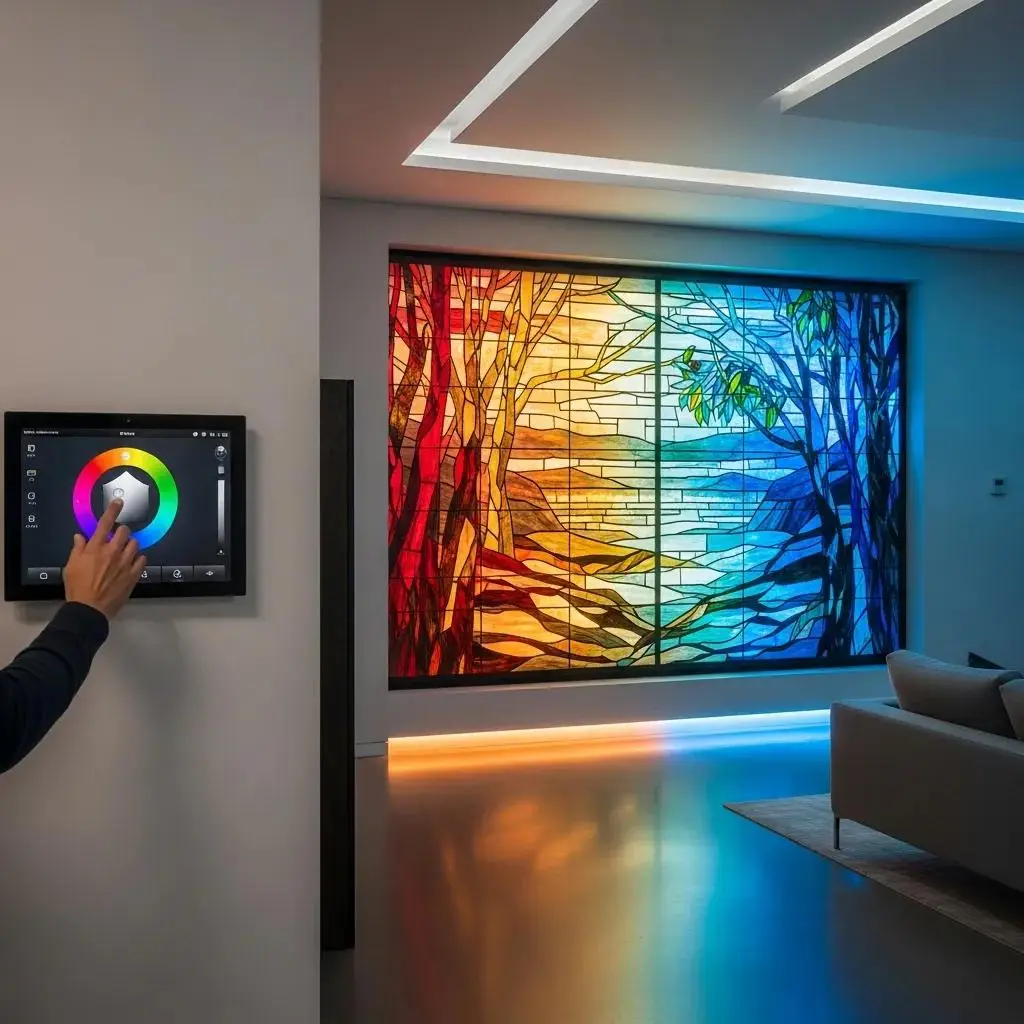
Smart lighting controls offer innovative solutions for managing the illumination of stained glass installations. These systems allow for dynamic adjustments based on time of day, occupancy, and ambient light levels, enhancing both functionality and aesthetic appeal.
What Are the Benefits of Dynamic and Automated Lighting Systems?
Dynamic and automated lighting systems provide several benefits:
- Energy Savings: Automatically adjusting lighting levels based on natural light availability reduces energy consumption.
- Customization Options: Users can create specific lighting scenes to highlight different aspects of the stained glass throughout the day.
- User Engagement: Interactive controls allow users to adjust lighting settings easily, enhancing their experience of the artwork.
These features make smart lighting an essential component of modern stained glass installations.
How Can Tunable White Lighting Improve Aesthetic and Energy Performance?
Tunable white lighting systems allow for the adjustment of color temperature, which can significantly impact the aesthetic quality of stained glass. By changing the warmth or coolness of the light, these systems can enhance the colors of the glass, creating a more immersive experience. Additionally, they contribute to energy performance by optimizing lighting levels based on the time of day and the specific needs of the space.
Which Energy Efficiency and Sustainability Practices Are Essential in Stained Glass Lighting?
Sustainability is becoming increasingly important in lighting design, particularly for stained glass installations. Implementing energy-efficient practices not only reduces environmental impact but also lowers operational costs.
How Does Sustainable Material Selection Impact Lighting Quality?
Selecting sustainable materials for lighting fixtures and systems can significantly impact the overall quality of illumination. For example, using recycled materials for fixtures or energy-efficient bulbs can enhance the sustainability of the installation while maintaining high lighting quality. This approach aligns with modern design principles that prioritize environmental responsibility.
What Are Industry Standards for Energy-Saving Stained Glass Illumination?
Adhering to industry standards for energy-saving lighting is essential for ensuring compliance and optimizing performance. Key standards include:
- LEED Certification: Encourages sustainable building practices, including energy-efficient lighting.
- ASHRAE Standards: Provide guidelines for energy efficiency in building systems, including lighting.
By following these standards, designers can create stained glass installations that are both beautiful and environmentally friendly.
How Can Collaboration Between Artisans, Architects, and Lighting Experts Enhance Stained Glass Projects?
Collaboration among artisans, architects, and lighting experts is crucial for the successful realization of stained glass projects. Each party brings unique expertise that can enhance the overall outcome.
What Is the Role of Partnership in Realizing Client Vision?
Partnerships play a vital role in aligning the vision of the client with the technical and artistic capabilities of the team. Effective communication and shared goals ensure that the final installation meets the client’s expectations while showcasing the stained glass’s beauty.
How Do Case Studies Demonstrate Successful Collaborative Lighting Solutions?
Case studies of successful stained glass projects highlight the importance of collaboration. For instance, a recent project involved a team of artisans and lighting designers who worked together to create a stunning installation that utilized both natural and artificial lighting. The result was a dynamic piece that changed with the light, captivating viewers and enhancing the architectural space.