Comprehensive Lead Came Repair, Releading & Soldering Services for Stained Glass Restoration
By Amanda Steine, Willet Stained Glass Studios
Lead came repair, releading and soldering are central to restoring stained glass. These interventions protect both the appearance and the structural soundness of complex panels. This article summarises the techniques and workflows used in came work, and it emphasises professional practice for preserving historical authenticity. It also covers the properties of lead came, a clear step‑by‑step repair sequence, and practical ways to collaborate with restoration specialists so clients can make informed project decisions.
Techniques and Processes
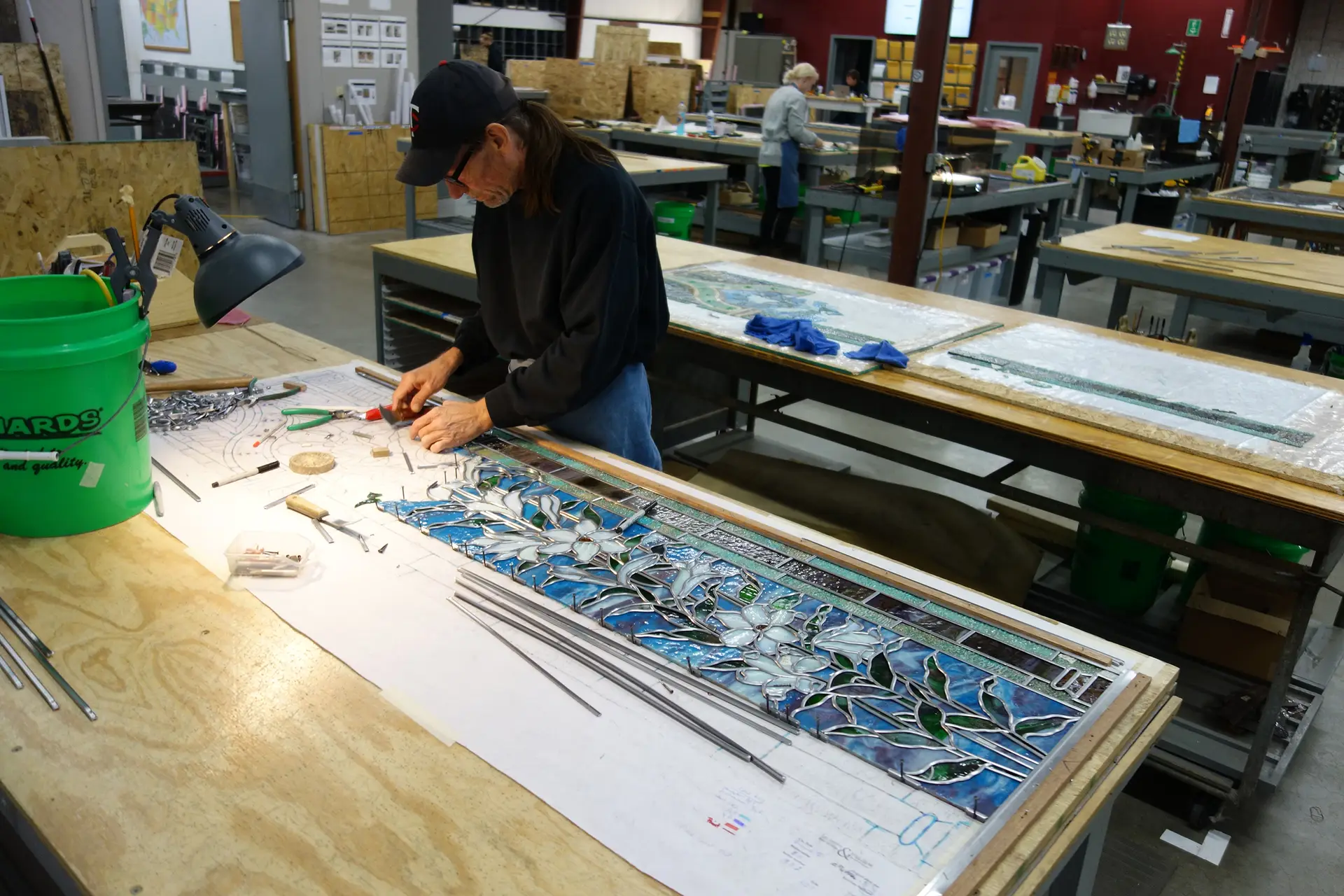
The techniques for lead came repair and soldering are methodical and precise. Restoration begins with a detailed assessment and photographic documentation of each panel. Technicians clean and stabilise individual glass pieces, repair cracks or breaks where possible, and then proceed to releading. The sequence finishes with careful fitting of new came and meticulous soldering to restore the panel’s structural integrity.
Importance of Professional Repair
Professional repair preserves an artwork’s historical and material integrity. Skilled restorers use established methods and suitable materials while diagnosing and preventing future deterioration. Clients gain confidence from a demonstrable portfolio of completed work and from approaches that prioritise longevity and fidelity to the original design.
The long‑term success of restoration projects depends on proactive strategies that protect the artwork.
Prophylactic Measures in Stained Glass Restoration
Our primary task, during a quarter century of restoration of the stained glass at the Church of St. Lorenz under my direction, has been to use carefully aimed prophylactic measures to
The restoration of medieval stained glass, 1985
Willet Stained Glass Studios specialises in stained glass design, fabrication and restoration, with particular expertise in lead came repair, releading and soldering. Their practice emphasises careful craftsmanship and precision to preserve both the aesthetic and structural qualities of each commission.
Expert Lead Came Repair, Releading & Soldering for Stained Glass
Lead came is the channelled metal that holds individual glass pieces within a panel. It unites the glass and provides support that prevents sagging and distortion. Understanding the material’s properties is essential for planning appropriate conservation work.
How Does Lead Came Support Stained Glass Panels?
Lead came binds individual glass pieces into a single structure and reduces distortion over time. Correct came work also accommodates thermal expansion and contraction of glass, which is critical to a panel’s longevity and ongoing structural performance.
What Are the Properties of Lead Came Used in Restoration?
Lead came for restoration is selected for composition, durability and flexibility. It is typically a lead alloy that balances strength with malleability, allowing precise shaping and a secure fit during installation.
Although techniques and materials have evolved, historical records emphasise the practical challenges inherent in working with lead came.
Properties & Manipulation of Stained Glass Lead Came
Stained glass lead came (strips of lead) is difficult to manipulate because of its bulk and lack of pliability; lead came limited the making of stained glass.
Stained glass craft made simple: step-by-step instructions using the modern copper-foil method, 1985
How Are Soldering Techniques Applied in Lead Came Repair and Releading?
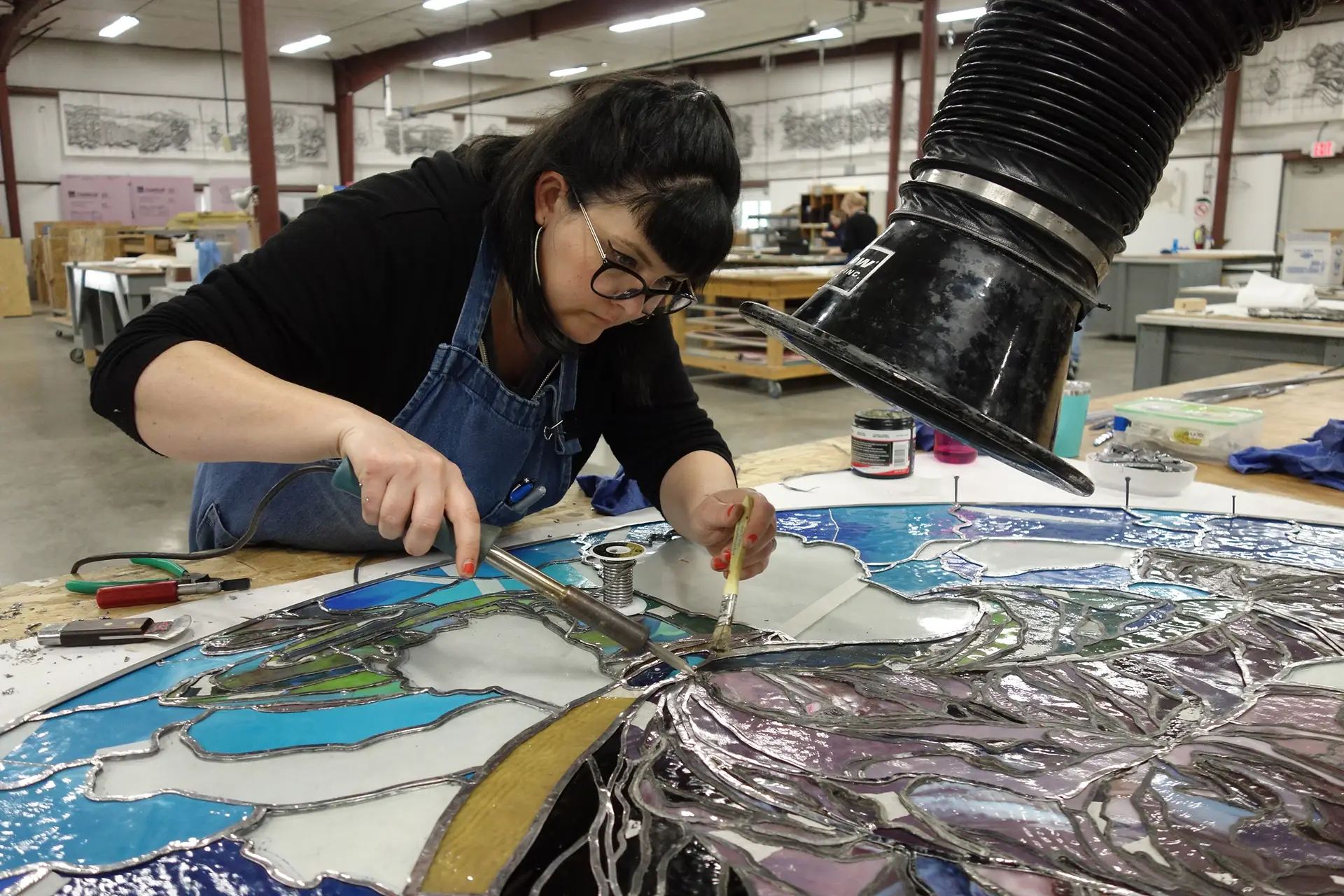
Soldering secures the joints where came meets came and where came meets glass. The process commonly uses a lead‑tin filler alloy melted to form a durable bond. Proper soldering is essential to the panel’s structural performance and prevents joint failure over time.
What Are the Best Practices for Soldering Lead Came Joints?
Best practice includes thorough cleaning of joint surfaces and removal of oxidation, precise heat control, and selecting appropriate solder alloys and flux. Avoiding overheating and ensuring sufficient solder volume are key to producing reliable, long‑lasting joints.
How Does Soldering Ensure Structural Integrity in Stained Glass?
Well‑executed soldering creates strong, durable joints that stabilise the glass assembly and prevent movement. This is especially important in large panels, where glass weight and external forces stress the joints. Effective soldering therefore extends both service life and the artwork’s visual integrity.
What Is the Step-by-Step Process for Lead Came Repair and Stained Glass Panel Restoration?
The step‑by‑step process for lead came repair and panel restoration generally follows a defined sequence:
- Initial Assessment: Evaluate the condition of the stained glass panel and document any damage.
- Cleaning and Repairing: Clean the glass pieces and repair any cracks or breaks.
- Releading: Remove the old lead came and replace it with new came, ensuring a secure fit.
- Soldering: Solder the joints to secure the glass pieces in place.
- Reinstallation: Carefully reinstall the restored panel in its original location.
This systematic approach addresses every element of restoration and returns the panel to high standards of craft and stability.
How Is Lead Came Removed and Replaced During Releading?
Releading requires careful assessment and documentation of the panel’s original assembly. Technicians remove the old lead with care to avoid damaging glass elements. New came is then cut and fitted so it seats snugly around each piece, a process that preserves the panel’s integrity for future generations.
What Quality Controls Ensure Superior Craftsmanship in Restoration?
Quality control in stained glass restoration includes rigorous inspections at every stage. Conservators verify material suitability, confirm accurate reassembly and perform final checks before reinstallation. Adherence to these standards ensures superior workmanship and durable results.
How Do Costs and Project Planning Affect Lead Came Restoration and Custom Fabrication?
Costs and project planning shape lead came restoration and bespoke fabrication. Project scope, material choices and the required level of skilled labour are primary cost drivers. Thoughtful planning helps allocate resources efficiently and supports timely delivery.
What Factors Influence the Cost of Lead Came Repair and Releading?
Several factors influence cost, including:
- Project Scope: The size and complexity of the stained glass panel can significantly affect costs.
- Material Selection: The choice of lead came and glass types will influence the overall budget.
- Labor Costs: Skilled labour is essential for quality restoration, and rates vary with expertise and location.
Awareness of these influences enables clients to plan budgets realistically and set priorities for conservation and fabrication work.
How Can Clients Collaborate Effectively with Willet Stained Glass Studios?
Effective collaboration begins with clear communication of project objectives and constraints. Willet’s team works in partnership with clients, architects and stakeholders to align conservation goals with practical considerations. Respectful engagement with expert recommendations improves outcomes and helps preserve the work’s long‑term value.
By familiarising themselves with the technical aspects of lead came repair, releading and soldering, clients are better equipped to make informed choices. With the experience and craftsmanship offered by Willet Stained Glass Studios, stained glass artworks can be conserved and passed on to future generations.