
Stained Glass Conservation: Documentation, Reports & Archival Records
By Amanda Steine, Willet Stained Glass Studios
Conservation documentation is fundamental to preserving stained-glass heritage and safeguarding historical integrity during restoration. This article examines the role of documentation, reporting and archival records within stained-glass restoration. Readers will find the essential components of effective documentation, the role of photographic records and the value of condition assessments. With many historic windows subject to deterioration, clarity in these processes supports sound preservation decisions. The sections that follow cover conservation documentation, reporting practice, archival management and maintenance.
Conservation Documentation
Conservation documentation is the systematic recording of a window’s condition, treatments and history. It ensures restoration is informed and respects original artistry. Detailed records enable conservators to monitor change over time and maintain a comprehensive view of the object’s state. Photographic documentation is central to this work, showing condition before, during and after intervention. Thorough conservation records allow stakeholders to protect the historical significance of stained-glass windows for future stewardship.
Willet Stained Glass Studios specialises in providing detailed conservation documentation within its restoration services. The studio produces comprehensive reports that assist preservation societies, churches and architects in the ongoing care of stained-glass heritage.
Reporting
Reporting is a core element of conservation documentation and comprises preparation of detailed accounts of condition and treatment. Comprehensive reports commonly include metadata, condition assessments and treatment histories; these elements support future conservation planning. Such reports act as an authoritative reference for conservators and other stakeholders, ensuring restoration actions are recorded and transparent.
Comprehensive condition reports present visual evidence and outline recommended actions for preservation.
Stained Glass Condition Reports: Photos, Descriptions & Treatment
The condition report for each window should begin with photographs and drawings and supplemental written description. An analysis of these conditions should result in an assessment of the window’s overall condition and recommendations for treatment.
Stained Glass Conservation: Condition Analyses and Specifications, 1996
Metadata supplies essential context and facilitates the organisation of archival records. By adopting consistent reporting practices, conservators improve communication among stakeholders and raise the overall standard of restoration projects.
Archival Records
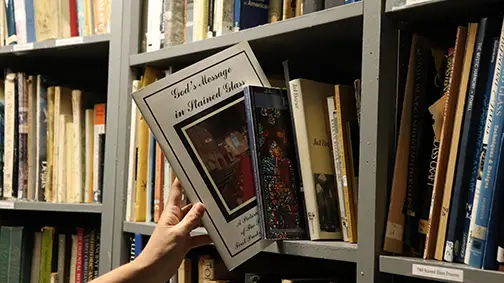
Archival records underpin the long-term preservation of stained glass by preserving historical context for future interventions. Proper records management ensures information is retrievable and that the condition of the glass is recorded across its lifecycle. Long-term storage measures—such as climate control and protective housing—are essential to maintain the integrity of archival materials.
Condition reporting during restoration forms a critical strand of archival management. Documenting the state of a window at defined stages enables informed decisions about interventions and provides a basis to assess the effectiveness of restoration work. This methodical approach supports both preservation and the coordination of reinstallation.
How are Archival Records Managed for Historical Stained Glass?
Management of archival records for historic stained glass involves cataloguing for straightforward retrieval and safeguarding all relevant data. This typically includes a structured database that grants conservators access to treatment histories, condition assessments and photographic documentation. A robust archival system ensures vital information remains available for future reference.
What are best practices for digital and physical archival record management?
Best practices for managing archival records include:
- Digital Storage Standards: Utilizing high-quality digital formats and secure storage solutions to preserve photographic documentation and reports.
- Physical Storage Conditions: Ensuring that physical records are stored in climate-controlled environments to prevent deterioration.
- Regular Inspections: Conducting routine checks on both digital and physical records to ensure their integrity and accessibility.
These measures help preserve the quality and longevity of archival records and thus support ongoing conservation efforts.
Best Practices
Adopting best practices in documentation and restoration is essential to safeguard stained-glass heritage. Regular inspections detect issues at an early stage and permit timely, measured intervention. Professional cleaning and maintenance mitigate deterioration and extend the service life of the glass.
The use of appropriate, high-quality materials during restoration is another key practice that contributes to durable outcomes. Adherence to these guidelines strengthens restoration effectiveness and preserves the historical integrity of stained-glass work.
Conclusion
Conservation documentation, reporting and archival records are foundational to stained-glass restoration. These processes protect historical integrity and provide the information necessary for future conservation. By following established best practices and maintaining comprehensive records, stakeholders contribute to the continued preservation of this distinctive cultural heritage.
What is Conservation Documentation in Stained Glass Restoration?
Conservation documentation in stained-glass restoration is the systematic recording of condition, treatment and history for each window. Such documentation forms a comprehensive record that informs future interventions and conserves the historical significance of the work.
How does photographic documentation capture stained glass condition?
Photographic documentation records the condition of stained glass through high-resolution images made before, during and after restoration. These images provide essential visual evidence for tracking change over time.
Advanced techniques such as 3D scanning further increase the precision with which these visual changes are captured and monitored.
3D Documentation & Condition Monitoring for Stained Glass
the documentation and monitoring of historical stained glass windows of the 3D comparison of the condition before and after the
3D inspection of the restoration and conservation of stained glass windows using high resolution structured light scanning, 2019
Why are condition assessment reports essential for heritage preservation?
Condition assessment reports are essential because they record the existing state of stained-glass windows and establish a baseline for conservation. These reports underpin future work by enabling evaluation of intervention outcomes against that baseline.
How do archival records support restoration and historical research?
Archival records support restoration and research by preserving a comprehensive history of a window’s treatments and condition. These records—treatment histories, assessments and images—inform future conservation decisions and scholarly study.
Which Conservation Report Templates Facilitate Effective Documentation?
Conservation report templates support effective documentation by providing a standardised format for key information. Typical components of a conservation report include:
- Condition Assessment: A detailed evaluation of the stained glass’s current state.
- Treatment History: A record of all interventions performed on the glass.
- Photographic Documentation: High-quality images that visually represent the condition of the stained glass.
Structured templates assist in categorising the various types of conservation studies and reports required for rigorous documentation.
Stained Glass Conservation: Reports & State of Conservation
conservation studies of stained glass windows was divided in four typologies: intervention report, material characterization, state of conservation
The conservation of stained-glass windows in Latin America: A literature overview, MF Macedo, 2018
How do standardized templates improve restoration project planning?
Standardised templates improve project planning by ensuring consistency in documentation. This consistency facilitates collaboration among conservators, architects and preservation societies and supports more effective restoration outcomes.
How Does Conservation Documentation Integrate with the Stained Glass Restoration Process?
Conservation documentation integrates with restoration by supplying the information that guides treatment choices. Condition assessments, treatment histories and photographic records together inform the restoration strategy and support accountable decision-making.
What role do architects and preservation societies play in documentation?
Architects and preservation societies contribute by collaborating with conservators to ensure restoration aligns with preservation standards. Their participation also assists in securing funding and resources necessary for conservation projects.
How does detailed documentation enhance restoration quality and legacy?
Detailed documentation improves restoration quality by recording condition and treatment history with clarity. That record enables informed decisions and helps ensure the artwork’s legacy is preserved for future generations.